
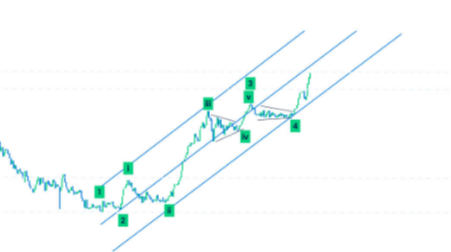
Market reversals emerge when price action and momentum signals converge, suggesting a shift in trader sentiment. The approach is data-driven and probabilistic, weighing pattern evidence, volume divergence, and order-book cues alongside intraday flow. Context matters: macro breadth and sector leadership can reinforce or undermine signals. Practical setups rely on explicit triggers and disciplined risk controls, with position sizing calibrated to risk. The discussion remains open as these factors interact, inviting further examination of confirmations and contingencies.
What Signals Kick Off a Reversal? Price and Momentum Clues
Reversals often begin with a convergence of price and momentum signals that suggest a shift in trader sentiment. The analysis favors objective patterns over narrative cause, noting that volume divergence can precede momentum shifts while price exhaustion limits upside or downside. Probabilistic assessment weighs multiple indicators, reducing overconfidence and increasing readiness for confirmation or reinforcement before committing to a reversal hypothesis.
Reading Volume and Liquidity for Reversal Confirmation
Volume and liquidity metrics provide a probabilistic lens for confirming reversals, focusing on how trade size, order book depth, and intraday flow corroborate or contradict price signals.
The analysis emphasizes volume indicators and liquidity cues as supporting evidence, not certainties, with cautious interpretation.
Traders weigh spikes against context, seeking probabilistic alignment between activity patterns and ensuing price moves.
Macro and Market Context: When Trends Lose Steam
When trends falter, macro and market context becomes essential for assessing durability.
The analysis weighs macro nuance, cycle fatigue, and relative sector leadership while monitoring volume signals for corroboration.
Probabilistic assessments emphasize risk controls, recognizing that persistent breadth weakness and macro shocks can erode momentum.
Decisions rely on disciplined, data-driven thresholds rather than premature commitment to directional certainty.
Read Also: How to Identify Legit Crypto Projects
Practical Setups: Patterns, Triggers, and Risk Management
Practical set-ups for identifying market reversals hinge on concrete pattern recognition, trigger criteria, and disciplined risk controls.
This analysis emphasizes probabilistic assessments rather than assurances, framing entries around trend exhaustion signals and corroborating intermarket analysis.
Risk management remains central, with explicit position sizing logic and stop structure.
Execution favors disciplined risk controls, transparent criteria, and adaptable plans aligned with freedom-minded, data-driven traders.
Frequently Asked Questions
How Reliable Are Reversal Signals Across Different Timeframes?
Reversal timing varies with timeframe reliability; cautious analysis shows signals align more consistently across shorter horizons yet exhibit weaker precision on longer spans. Probabilistic evaluation suggests diversification of timeframes improves overall signal quality for freedom-seeking traders.
Can You Identify Reversals Without Price Patterns?
Fewer than 40 percent of reversals occur without price patterns, a statistic illustrating uncertainty. While rare indicators exist, a two word discussion onlying signals remains insufficient; market psychology suggests probabilistic, data-driven judgment, not certainty, when identifying reversals without patterns.
What Role Do Central Banks Play in Reversals?
Central banks influence reversals through monetary policy signals, rate paths, and liquidity conditions; expectations shift as policy guidance evolves, altering probabilistic outcomes. The analysis emphasizes data-driven uncertainty, acknowledging freedom-seeking readers while maintaining cautious interpretation of macroeconomic dynamics.
How Do Earnings Announcements Affect Trend Reversals?
Earnings announcements can precede or confirm trend reversals; coincidences emerge as earnings surprises and guidance revisions shift expectations, altering probabilities. The data suggests sensitivity to surprises; traders weigh revisions, balancing risk and freedom while updating trend likelihoods cautiously.
What Are Common False Reversal Indicators to Watch For?
Common false signals include premature breakouts and exaggerated volumes, while hype induced reversals often fade. The analysis remains probabilistic, cautiously weighted; freedom-seeking readers should diversify signals, validate with multiple timeframes, and acknowledge uncertainty before acting.
Conclusion
A reversal appears when data and momentum diverge from price: volumes dry up as price stalls, while breadth narrows and macro risk subtly shifts. Yet price action keeps its own logic, sometimes defying indicators before a trend reasserts. The cautious trader weighs probabilistic signals—order-book depth, intraday flow, and risk controls—against overarching context. In this juxtaposition of signal and silence, discipline tempers judgment: confirm with multiple metrics, size positions prudently, and adapt plans as conditions evolve.
